How multi-step funnels can lower CPL on paid traffic
A practical explanation of how multi-step lead funnels can reduce cost per qualified lead when they improve mobile UX, intent capture, routing and ad-platform signals.
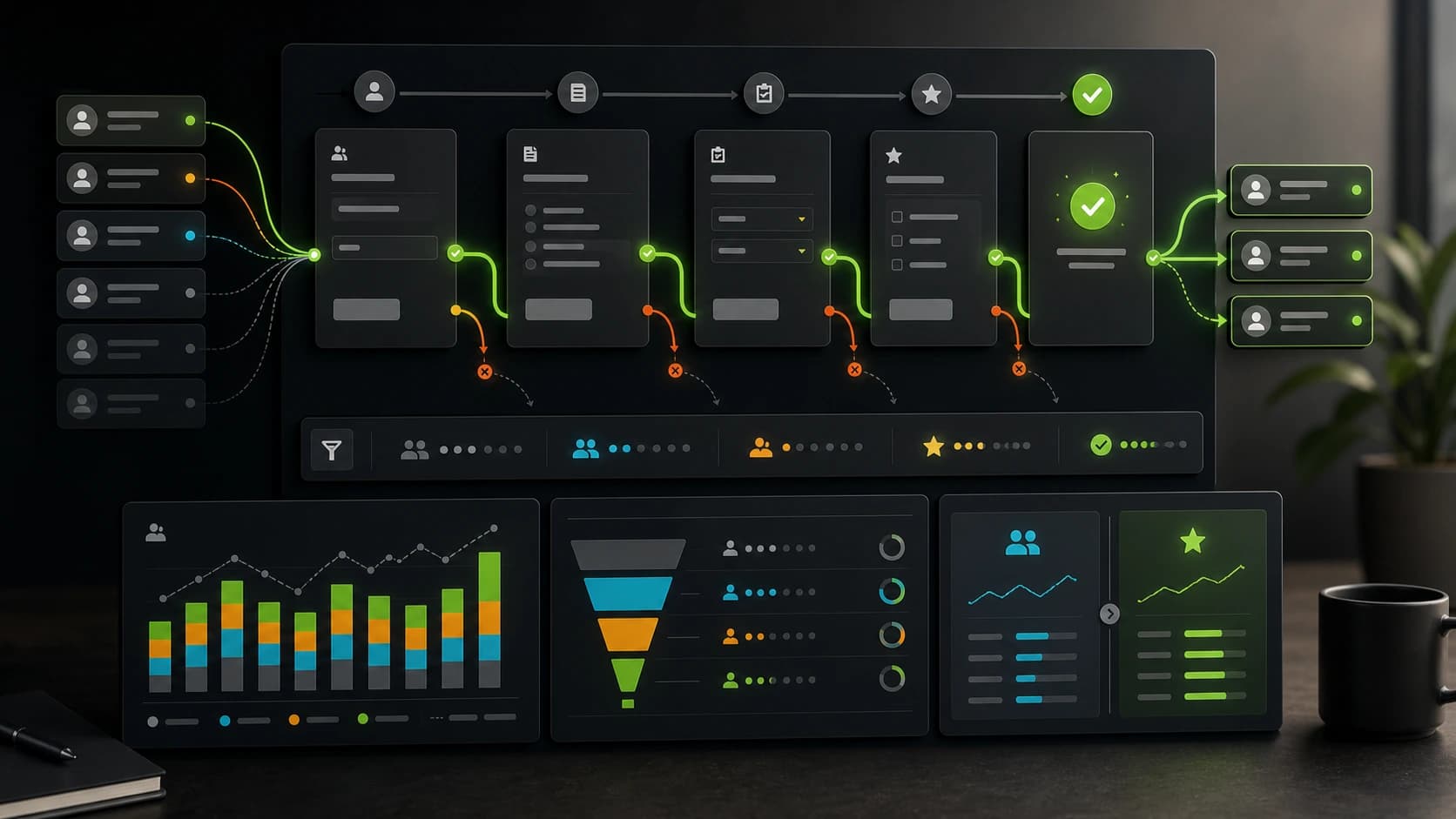
Multi-step funnels are often sold as a conversion-rate trick. That is incomplete. For paid traffic, the real benefit is not just more submissions. The benefit can be better lead quality, cleaner attribution and a funnel that gives the ad platform a stronger conversion signal.
That is what can lower cost per qualified lead when the questions, routing and follow-up match the offer.
If you are looking for the broader paid-ads playbook, start with how to reduce cost per lead without losing lead quality. This article focuses specifically on why the multi-step format helps.
Single-page forms create two problems
The first problem is friction. A single-page form shows the whole workload upfront: name, email, phone, budget, problem, company, message, consent, submit. Cold mobile visitors see effort before they see momentum.
The second problem is weak context. A short single-page form may convert, but sales receives low-information leads. A long single-page form may qualify, but many visitors never start.
Multi-step funnels solve this by pacing the ask.
One question per screen builds momentum
The first question should be easy to answer. Once the visitor clicks, they have started. Each following step asks for a little more context.
Good pacing looks like this:
- Easy intent question
- Problem or goal question
- Fit question
- Budget or timeline question
- Contact step
This structure reduces the perceived workload. The visitor does not have to process the whole form at once. On mobile, that difference matters.
For a deeper UX guide, read how to reduce form abandonment on lead generation forms.
Better questions improve lead quality
A lower CPL is not useful if the lead cannot buy.
Multi-step funnels make it easier to ask qualification questions because the visitor answers them one at a time. That lets you capture:
- Budget range
- Timeline
- Service fit
- Location
- Current stage
- Main pain
- Preferred next step
With that data, you can route leads intelligently and measure cost per qualified lead instead of cost per email address.
If too many weak leads already reach your CRM, use the routing structure in how to qualify leads before they reach your CRM.
Conditional endings protect sales time
Every submission should not receive the same thank-you page.
For example:
- High-fit lead: "Book your strategy call"
- Medium-fit lead: "Watch this case study first"
- Low-fit lead: "Here is a free checklist to prepare"
This matters because sales time is part of acquisition cost. If a campaign produces cheap leads that waste expensive calls, the real CPL is higher than the dashboard says.
Per-step analytics show the bottleneck
On a normal form, you often know only visits and submissions. That hides the question causing the problem.
A multi-step funnel lets you inspect:
- How many visitors start
- Where they drop off
- Which question slows them down
- Which branch creates qualified leads
- Which campaign sends better-fit visitors
That gives you a practical optimization loop. You can rewrite one question, change one option or move one screen instead of guessing.
The ad platform needs a better signal
Paid platforms optimize toward the events you send back. If every raw form fill is treated equally, the algorithm may find people who submit forms but do not become customers.
A stronger setup sends more context:
- A deduplicated
Leadevent via Pixel and server-side CAPI - Attribution fields like UTM,
gclidandfbclid - Qualification status in your CRM
- Downstream qualified lead or booked-call events when possible
The closer your conversion signal is to sales value, the better your campaign feedback loop becomes.
What to test first
Do not redesign everything. Test one meaningful change:
- Convert a long form into a five-step funnel.
- Move contact fields to the end.
- Add one budget or timeline question.
- Create a separate ending for weak-fit leads.
- Track cost per qualified lead for 14 days.
If raw submissions drop but qualified leads rise, the funnel is doing its job.
When multi-step funnels are not the answer
Use a simple form when:
- The visitor is already high intent
- The action is extremely low risk
- The business does not need qualification
- The offer is transactional and obvious
Multi-step funnels are strongest when traffic is cold, the offer is considered, and lead quality changes the economics.
How Fluenx handles this
Fluenx gives you one-question-per-screen funnels, conditional endings, per-step analytics, UTM and click-id capture, and native server-side Meta CAPI. That means the funnel can improve both the visitor experience and the conversion signal your campaigns depend on.