How to reduce cost per lead without losing lead quality
A practical guide to reducing cost per lead by fixing targeting, form friction, attribution and qualification instead of chasing cheaper raw leads.
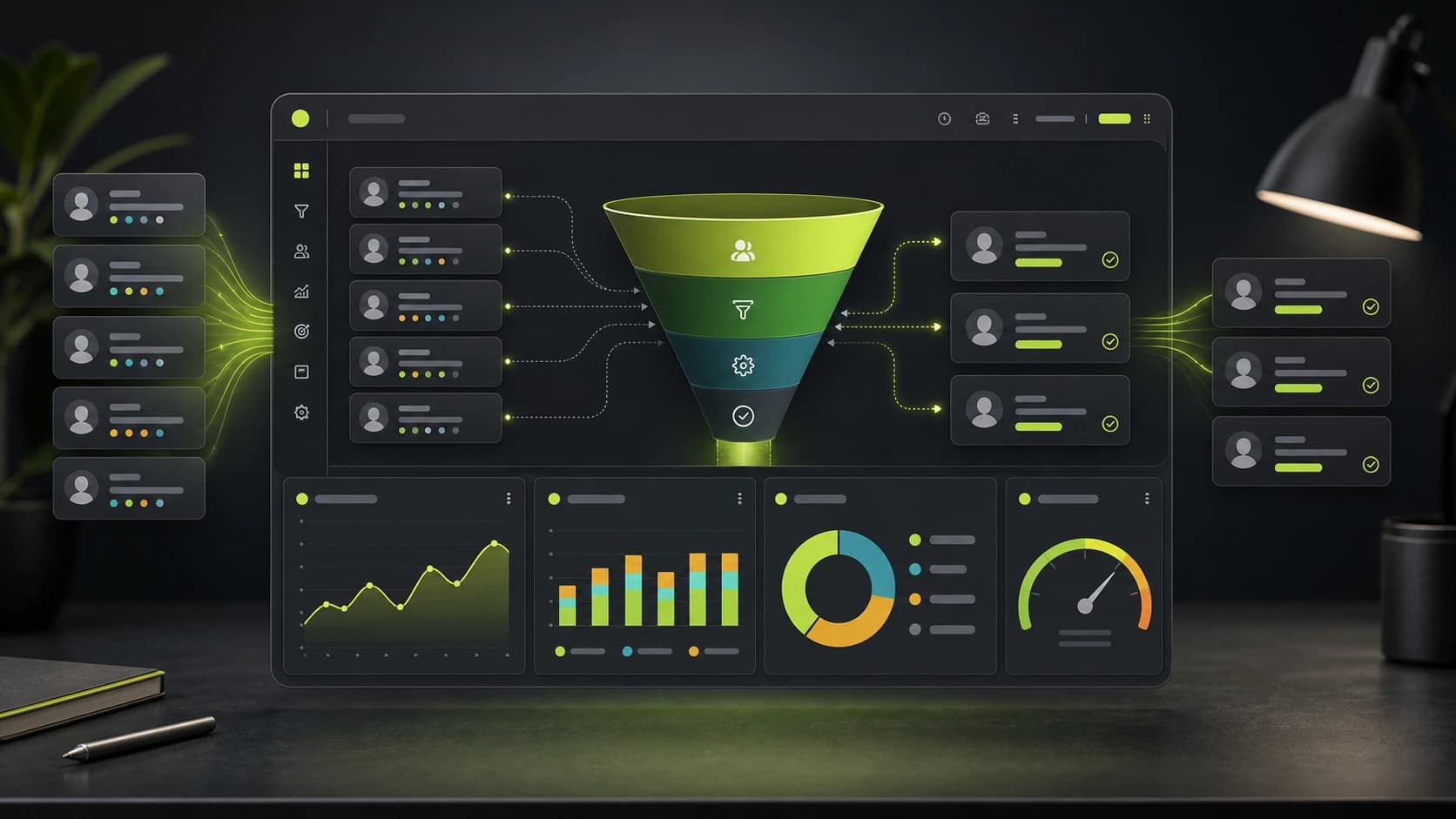
Reducing cost per lead is easy if you only care about the number in the ads dashboard. Remove every qualifying question, run broad traffic to a short form, and you will usually get more submissions.
The problem is that sales does not buy raw submissions. Sales needs people who have the right problem, budget, timing and intent. A cheaper lead that never books, never answers or cannot buy is not a cheaper lead. It is hidden waste.
The better goal is to reduce cost per qualified lead. That means lowering waste while keeping or improving the percentage of leads that can actually become pipeline.
Start by separating raw CPL from qualified CPL
Most teams look at:
Cost per lead = ad spend / form submissions
That is useful, but incomplete. Add the second number:
Cost per qualified lead = ad spend / qualified leads
Then compare campaigns on both. A campaign with 100 leads at $20 CPL looks better than a campaign with 40 leads at $35 CPL until you learn that the first campaign produced 8 qualified leads and the second produced 22.
Use simple qualification statuses:
- Qualified
- Not ready
- Low budget
- Wrong fit
- Duplicate or spam
You do not need a complex scoring model on day one. You need a consistent definition of what sales should follow up.
Find where the waste enters the funnel
High CPL is usually caused by one of four problems:
- You are paying for the wrong clicks.
- Good clicks are not converting.
- Bad-fit visitors are converting too easily.
- Attribution is broken, so the algorithm learns from the wrong signal.
Do not fix these in a random order. Diagnose the layer first.
If search terms are irrelevant, fix targeting and negatives. If visitors start the form but abandon before contact details, fix form UX. If many people submit but sales rejects them, add qualification. If platforms cannot match the lead back to the click, fix gclid, fbclid, UTM and server-side tracking.
Reduce bad clicks before changing the form
For Google Ads, review search terms and remove intent that cannot buy:
- "free"
- "cheap"
- "jobs"
- "template"
- "definition"
- "course" when you sell a service
- locations you do not serve
- DIY intent when you sell done-for-you help
For Meta Ads, check whether the creative is attracting curiosity instead of buying intent. Cheap lead magnets often create high form volume and weak sales conversations. The ad should set expectations before the form does.
The form should not be the first place the visitor discovers the real offer.
Increase conversion rate without removing every filter
A common mistake is to reduce CPL by deleting qualification questions. That can improve raw conversion rate while making sales quality worse.
Instead, reduce friction in the way questions are asked:
- Ask one question per screen on cold mobile traffic.
- Start with an easy intent question.
- Move contact details after the visitor has momentum.
- Use ranges for budget and timeline.
- Keep sensitive questions close to the point where their purpose is obvious.
- Show a next step that matches the visitor's answers.
For a deeper form UX walkthrough, read how multi-step funnels can lower CPL and how to reduce form abandonment on lead generation forms.
Add qualification before the CRM
If every form fill enters the CRM as the same lead, your team loses context and your reporting gets noisy.
Add a few decision questions before submission:
- What problem are you trying to solve?
- Which budget range makes sense if this is the right fit?
- When do you want to start?
- What have you already tried?
- Are you the decision maker?
Then route the lead:
- Qualified leads go to the booking page or priority CRM stage.
- Not-ready leads go to nurture.
- Wrong-fit leads get a helpful no-fit ending.
This reduces the number of weak calls without blocking serious buyers. See the full structure in how to qualify leads before they reach your CRM.
Fix attribution before judging winners
You cannot reduce CPL reliably if paid-click data disappears before the lead submits.
Capture these values on the first page view:
utm_sourceutm_mediumutm_campaignutm_termutm_contentgclidgbraidwbraidfbclid
Then store them with the lead and send them to the CRM as structured fields. If you lose gclid, Google Ads cannot connect offline outcomes cleanly. If you lose fbclid, Meta matching can be weaker. If you lose UTMs, humans cannot understand which campaign produced the lead.
Read how to capture gclid and fbclid in lead forms and how to capture UTM parameters on form submissions for the implementation detail.
Send better conversion signals back to ad platforms
Ad platforms optimize toward the events they receive. If the only event is "someone submitted a form", the algorithm may find people who submit forms easily.
A better signal stack is:
- Browser conversion event when the form submits.
- Server-side event for reliability.
- Shared event ID for deduplication.
- Click identifiers and landing page context.
- Qualification status in the CRM.
- Offline qualified lead or booked-call import when possible.
Google documents enhanced conversions for leads as a way to improve lead conversion measurement with hashed first-party data and offline imports. Meta's Conversions API is designed to send server, website or CRM events directly into Meta's systems. The practical takeaway is the same: do not stop at raw form fills if you can send better downstream signals.
What to test first
Run one test at a time:
- Add one budget or timeline question.
- Move contact details to the final step.
- Create a qualified and not-ready ending.
- Capture
gclid,fbclidand UTMs into the lead record. - Compare cost per qualified lead for two weeks.
Do not declare failure if raw submissions drop. The question is whether qualified leads, booked calls or pipeline improved for the same spend.
How Fluenx helps
Fluenx is built for this exact workflow: multi-step lead funnels, qualification logic, conditional endings, per-step analytics, UTM and click-id capture, and native server-side Meta CAPI.
Instead of optimizing for the cheapest form fill, you can build a funnel that tells you which campaigns produce leads worth calling.
Build a qualification funnel free